Zeus Biography
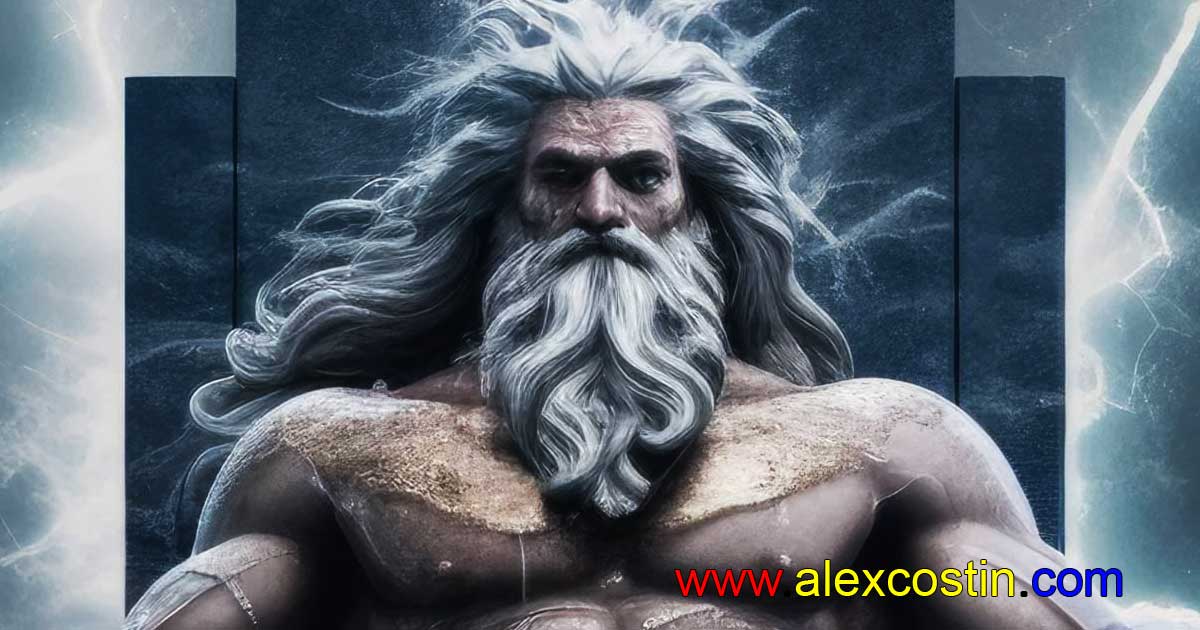
Zeus stands as the supreme ruler of the Olympian gods in ancient Greek mythology, renowned for his unparalleled power, thunderbolts, and role as the enforcer of justice among both gods and mortals. As the sky and weather god, he wielded authority over the heavens, often depicted enthroned on Mount Olympus with his signature lightning bolt. His fame stems from countless myths where he overthrew the Titans, established divine order, and intervened in human affairs through epic battles, transformations, and divine decrees. Zeus symbolizes strength, sovereignty, and the unyielding force of nature, inspiring art, literature, and worship across ancient civilizations for millennia.
Childhood
Zeus was born on Crete, the rugged island in the Mediterranean, to the Titan Cronus and the Titaness Rhea. His birth occurred amid great peril, as Cronus, fearing a prophecy that one of his children would overthrow him, devoured his firstborn offspring. Rhea, desperate to save Zeus, hid him in a cave on Mount Dikte, tended by nymphs and the goat Amalthea, who nursed him with her milk. This clandestine upbringing shielded him from his father's wrath, allowing him to grow strong in secrecy surrounded by divine caretakers who provided ambrosia and nectar for nourishment.
Education
Zeus received no formal schooling in the human sense but underwent rigorous divine training under the tutelage of the Centaur Chiron and the goddess Metis. Chiron imparted wisdom on warfare, hunting, music, and prophecy, honing Zeus's skills as a leader and warrior. Metis, goddess of cunning intelligence, taught him strategic deception and the art of swallowing his first wife to prevent rebellion, symbolizing his absorption of wisdom. These mentors equipped him with the knowledge to challenge cosmic order, blending physical prowess with intellectual mastery essential for his future dominion.
Career
Zeus's career launched with a triumphant rebellion against the Titans in the epic Titanomachy, a ten-year war where he freed his siblings from Cronus's belly using a magical emetic from Metis. Victorious, he divided the cosmos with Poseidon and Hades, claiming the skies as his realm. Throughout his reign, Zeus judged disputes among gods, punished oath-breakers with thunderbolts, and shaped mortal destinies through oracles like Dodona. His professional legacy includes forging alliances, battling giants in the Gigantomachy, and maintaining cosmic balance, solidifying his role as king of the gods.
Family Life
Zeus's family life brimmed with complexity, marked by numerous liaisons and offspring. He married his sister Hera, goddess of marriage, though their union was turbulent with jealousy-fueled conflicts. Zeus fathered gods like Athena from his head, Apollo and Artemis with Leto, Dionysus with Semele, and Hermes with Maia. Mortals bore him heroes such as Perseus, Heracles, and Minos through transformations into animals or showers of gold. Hera's wrath often targeted these paramours and children, yet Zeus's vast progeny populated myths, blending divine and heroic lineages across generations.
Achievements
Zeus achieved monumental feats that defined Greek mythology. He led the Olympians to victory in the Titanomachy, imprisoning the Titans in Tartarus and ushering a new golden age. His defeat of Typhon, the monstrous serpent, preserved order against chaos. Zeus established the Olympic Games to honor athletic prowess and founded sacred sites like Olympia and Dodona for worship. As protector of hospitality, kings, and suppliants, he gifted fire to Prometheus initially and inspired laws like the Greek city-states' constitutions, cementing his legacy as the ultimate arbiter of fate and justice.
Controversies
Zeus faced controversies primarily for his insatiable pursuits of mortal women, sparking divine and heroic tragedies. His seduction of Leda as a swan, Europa as a bull, and Danae as golden rain provoked Hera's vengeful persecutions, leading to stories of monstrous births like the Hephaestus's lameness. Punishments like flooding the world or striking mortals with lightning drew accusations of capricious tyranny. Mortal kings questioned his justice in myths like the judgment of Paris, igniting the Trojan War. These tales highlight tensions between his authority and moral ambiguities in divine behavior.
Zeus Summary
Zeus embodies the pinnacle of divine power in Greek mythology, evolving from a hidden infant on Crete to the thunder-wielding sovereign of Olympus. His life weaves triumph over Titans, strategic wisdom, prolific family ties, and contentious amours into a tapestry of cosmic rule. Achievements in battles and justice establishment overshadow controversies of infidelity and wrath, portraying a multifaceted god who enforced order amid chaos. Worshipped widely, Zeus influenced philosophy, art, and governance, remaining an enduring symbol of authority and the untamed sky. His myths continue to captivate, revealing humanity's awe for nature's might and moral complexities.
Content created by:
Alex Costin
Results driven services:
Digital Marketing
Digital Marketing Expert
CV
No tracking cookies!
General information purposes only!
Business partners offers (backlinks)
Google, Bing, Yandex and Baidu:
Search Engine Optimisation
How to and what to see:
Visit Barcelona
Cardiff Letting Agents:
2Let2
What is? | Achievements:
Duolingo
Copyright © 2024-2026 Alex Costin